
 White.png)

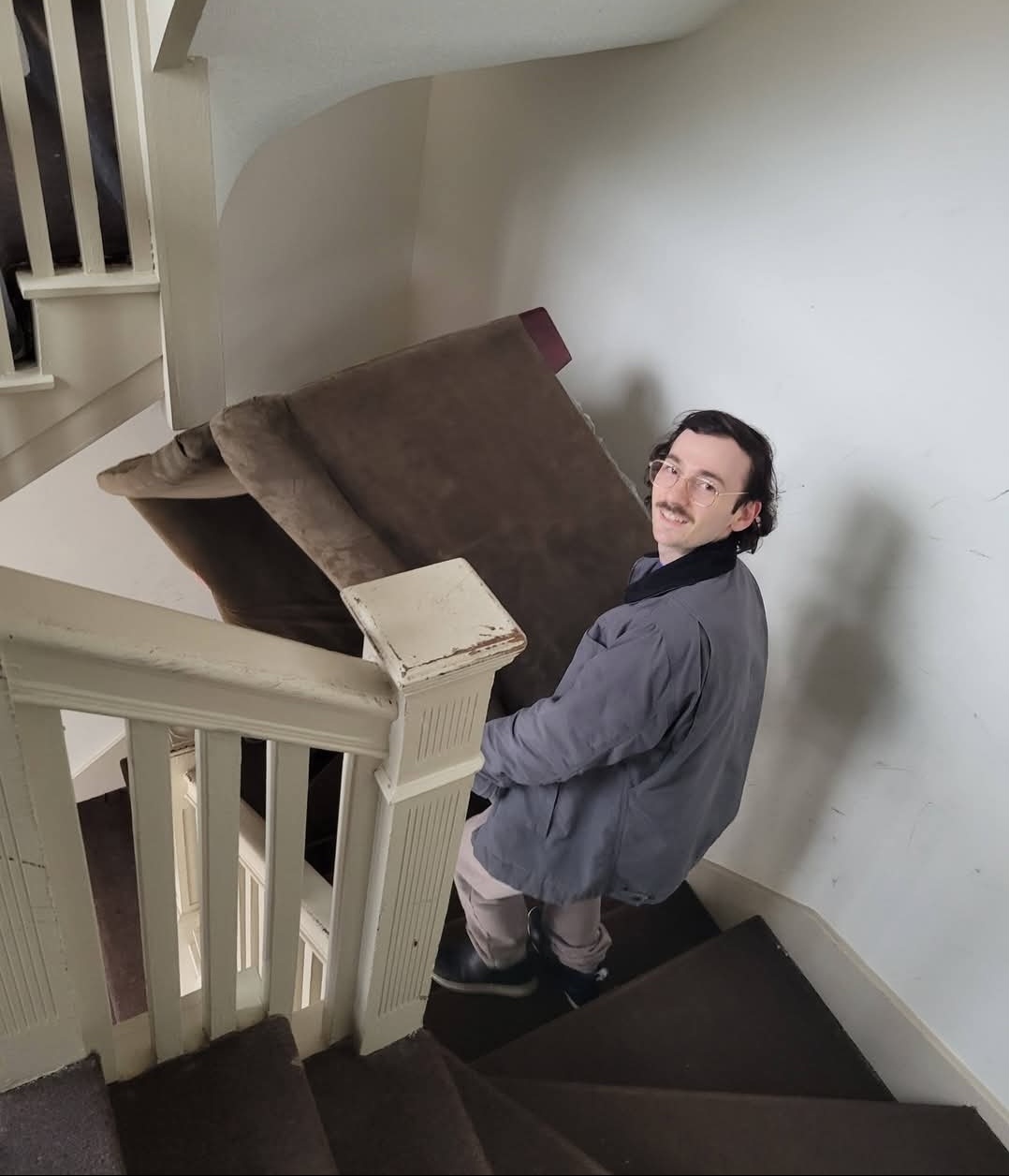
Pictured: myself (Cole Albert) and my dad Jim Albert on the other side of the couch. Dad's number one rule of lifting: don't be a hero! This month, I decided to take the plunge and search for a new apartment. I wanted to find a little more comfort than I can afford in the Allston-Brighton neighborhood I've come to know so well, and break free of the September 1st apartment cycle that Boston renters know all too well. My family visited from New Hampshire to help pack things up, which is always a hassle, but the real struggle was finding a place in the current environment. Boston has always struggled to come up with answers when it comes to housing. Short supply, predatory pricing, and stalled developments are known issues, but the solution remains unclear. The city has taken steps to address these issues with limited success. The Boston Housing Authority provides affordable units that are required to be built as a part of new luxury developments. You know the ones that look like they were made of Legos? This provides an option for many who could not afford to live here, with my own budget falling in this range, but this is far from a perfect system. With wait times lasting "weeks to months" and a lottery system that leaves little room for choice, it makes an already difficult process nearly impossible. In 2025, a change in the law attempted to deal with affordability: shifting the cost of a broker fee, often a full month's rent, onto the landlord. After going through that process myself, I found that many of the things people predicted about this change were coming true: costs are shifting back onto the tenant by raising prices, and brokers are now forced to compete in a free-for-all where many apartments already have a "listing agent," giving them less incentive to work on behalf of the renter. This comes down to supply and demand. If we had more housing, prices would settle through less competition, right? In theory, this is true, but Boston is one of the slowest-growing cities in the country, with the Boston Globe estimating a $4 billion housing shortfall over the next decade. That means the city will end up between 30 and 50 thousand homes short of what it needs for prices to stabilize. But why is development so slow? One of the major factors we can point out is the Boston Zoning Board of Appeals, which approves development plans one at a time in a cramped room up in City Hall. Progress is made with intent, but if it cannot be made in time for people who need it, then what good is it doing? I want to explore this topic in greater detail, and invite you to learn what I do in the process. If you have any thoughts on this topic or want to give us a tip about a new story, please leave a comment or send us a message.